



In India today, Hindutva politics often fixates on the claimed barbarism of the Turko-Persianate period. Mediaeval rulers, their monuments, taxation systems, military campaigns, and cultural influence are repeatedly portrayed as alien, oppressive and destructive. Mosque-building, Mughal culture, and political authority are selectively emphasised as evidence of cruelty or moral corruption. Aurangzeb is often singled out as the archetype of tyranny.
This selective reading of history is never neutral. It is used to justify the idea of a “civilised” Hindu order, framing the present as a moral correction of the past.
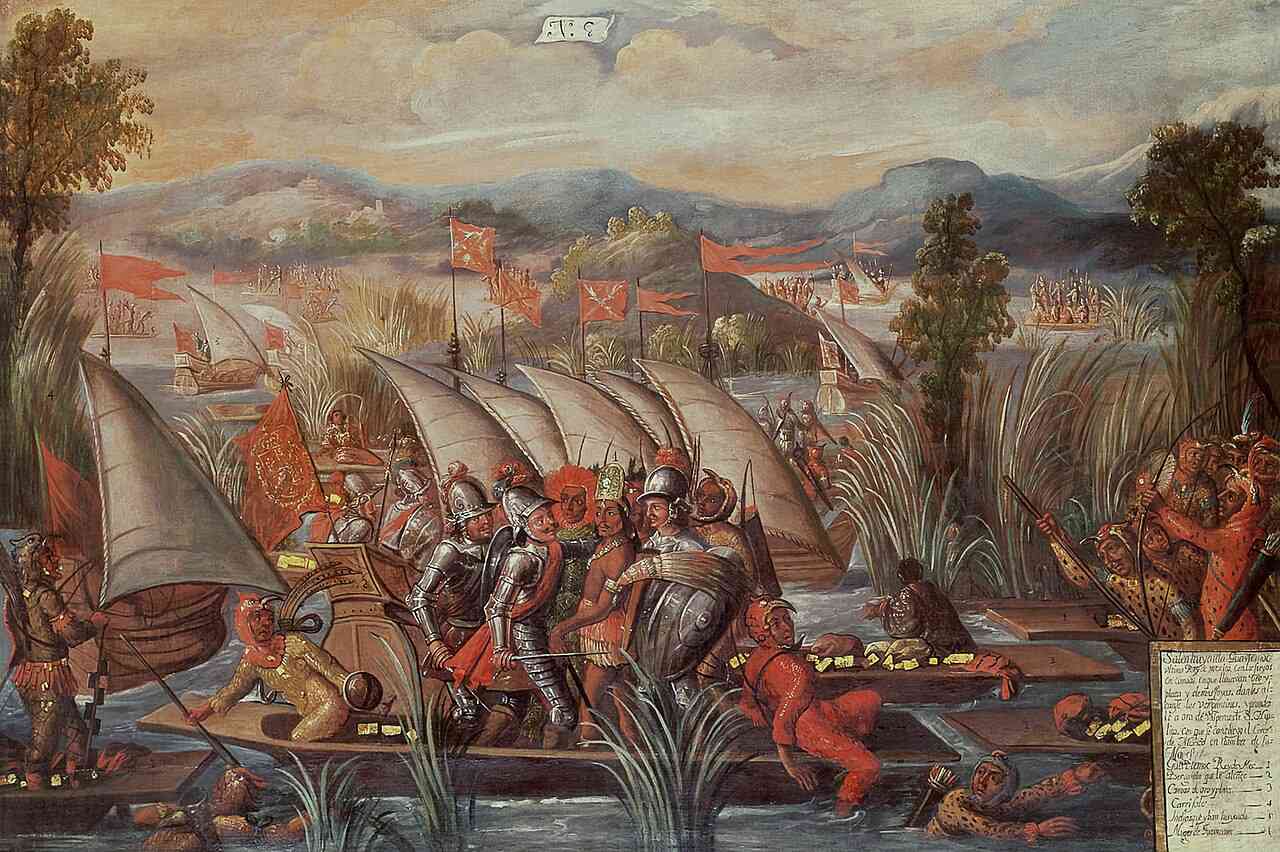
A similar logic has played out elsewhere. In Latin America, European colonisers used accounts of indigenous cruelty to morally justify the conquest of the Americas and centuries of oppression.
The Aztecs, for example, practised human sacrifice, ritualised warfare and harsh punishments. Captives were ceremonially killed, hearts removed, and in extreme cases, victims were flayed, their skins incorporated into ritual garments. But such practices were far from universal.
The Maya, Zapotec, Mixtec, and Inca performed sacrifices rarely, usually for symbolic or cosmological reasons rather than as instruments of state terror.
Overemphasising Aztec brutality created a one-sided image of indigenous “barbarity”, ignoring the moral and political complexity of these societies. Spanish theologians like Juan Ginés de Sepúlveda argued that this justified conquest as a civilising mission, while Bartolomé de las Casas defended indigenous rationality and humanity.
Yet the moralised conquest narrative endured and later shaped colonial projects in India, Africa, Australia, and North America, masking the vastly greater scale of European violence and normalising atrocities.
Even today, these narratives are weaponised. US Vice President JD Vance recently invoked Aztec sacrifices to frame debates about abortion and Christian identity, showing how colonial-era tropes continue to shape contemporary politics. In Latin America, nationalist groups highlight them to defend authoritarian policies: in Brazil, in particular, Jair Bolsonaro described indigenous communities as obstacles to development.
Historical revisionists such as Jacques de Mahieu explicitly argued that Aztec violence legitimised conquest. Social media amplifies such narratives, spreading fear and misinformation. David Nirenberg observes that xenophobia has become a highly profitable political “stock”, and studies by Petter Törnberg and Juliana Chueri confirm that far-right populists exploit historical distortions to destabilise democracies.
In India, Hindutva discourse does something similar: it selectively highlights mosque-building, Persianate culture, taxation systems, and Aurangzeb’s campaigns as evidence of cruelty, to justify exclusionary policies, territorial claims, and textbook rewrites. In both contexts, history is used as a tool to make moral and political claims about the present.
Latin America’s New and Post-New Left offers a very different approach. Emerging in the late 20th century, these movements combined historical memory, indigenous knowledge, and participatory politics. José María Mariátegui, the Peruvian thinker, emphasised indigenous collectivism and proposed an “Indo-American socialism” that adapted Marxist ideas to local realities.
Unlike mid-century guerrilla movements, the New Left was reformist rather than insurrectionary, aiming to redistribute power, strengthen popular agency, and institutionalise collective rights. Its revolution was imaginative and participatory rather than violent.
The Zapatistas of Mexico exemplify this approach. Rising in the 1990s to resist the North American Free Trade Agreement and neoliberal exclusion, they redefined democracy through indigenous cosmologies, declaring, “we are all equals because we are all different”.
Participation extended to schools, health centres, cooperatives, and community councils, creating governance from the bottom up. Leaders like Claudia Sheinbaum in Mexico and Pedro Castillo in Peru have carried forward these principles, foregrounding indigenous rights, local participation, and inclusive governance.
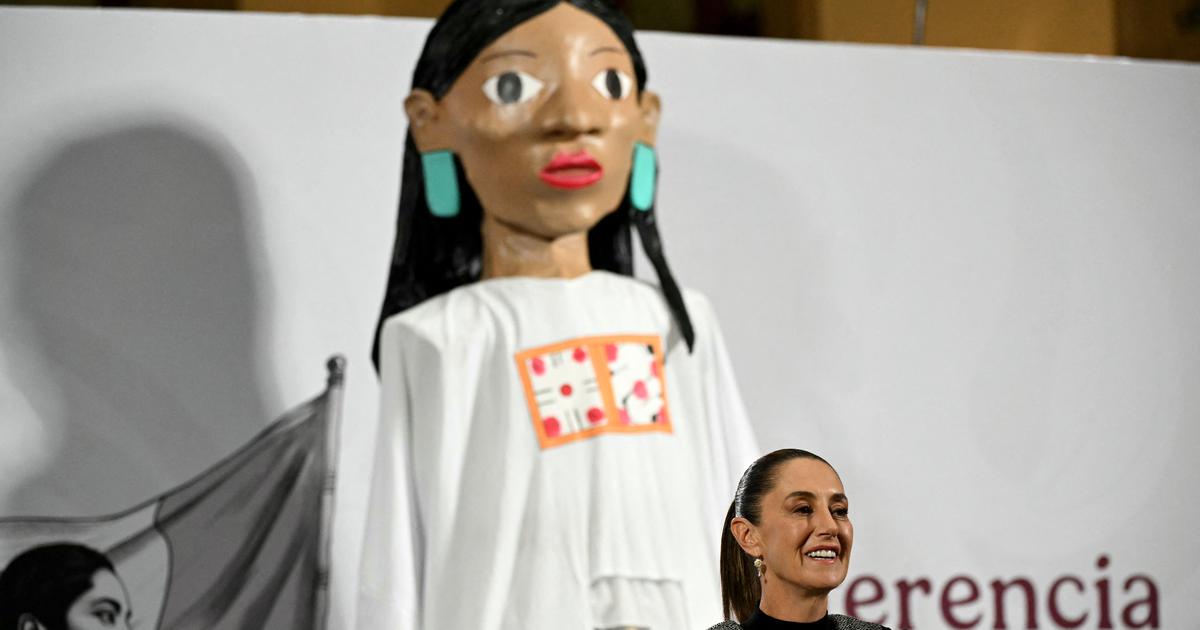
Sheinbaum’s declaration of 2025 as the “Year of the Indigenous Woman,” which restored sacred lands to Wixárika communities, provoked far-right backlash, showing how narratives of indigenous “threat” continue to resonate. Castillo faced violent opposition while trying to empower rural and indigenous communities, reflecting the enduring tension between emancipatory politics and moralising historical narratives.
The Post-New Left also engages actively in the digital sphere. Social media is not only a tool for mobilisation but also for countering misinformation, spreading knowledge, and linking communities across borders. While far-right actors rely on fear, distortion, and selective history, these movements combine reformist policies, participatory governance, and cultural inclusion.
Movements like Argentina’s Piqueteros or Brazil’s Landless Workers’ Movement connect everyday survival struggles to political empowerment, demonstrating that imagination and action must go hand in hand. Leaders like Lula da Silva, Gabriel Boric, and Gustavo Petro operate within democratic systems to redistribute resources, strengthen social citizenship, and experiment with decentralised governance.
The parallel with India is striking. Hindutva’s selective reading of history, emphasising Turko-Persianate “barbarism” and Aurangzeb’s campaigns, serves to justify exclusion, fear and moral superiority. Public imagination is shaped by what is highlighted and what is erased, much as Spanish colonisers foregrounded Aztec cruelty while hiding the genocidal impact of conquest.
The rhetoric of moralised history creates a hierarchy of “civilised” versus “barbaric”, giving legitimacy to contemporary exclusionary politics. Both contexts show that history is rarely neutral – it is a tool that can be deployed either to exclude and oppress or to imagine more inclusive forms of social organisation.
Latin America offers a hopeful example. Its New and Post-New Left shows that historical critique can coexist with political imagination. By integrating indigenous knowledge, participatory governance, and reformist policies, movements have reclaimed agency from narratives designed to intimidate and exclude.
They show that collective dreaming and practical action can challenge entrenched power and create fairer societies. For India, the lesson is urgent: critical engagement with history, rather than its weaponisation, is necessary if democracy, pluralism, and justice are to survive the pressures of exclusionary ideologies.
The stakes are high. Selective histories – whether Aztec sacrifice or Aurangzeb’s cruelty – have long been used to justify violence and fear. But Latin America demonstrates that societies can reinterpret the past, combine imagination with reform, and build structures that empower rather than oppress.
In a time when social media spreads distorted narratives faster than ever, these lessons are vital. Words do make worlds, but they can also remake them for the better. Collective imagination, grounded in history yet oriented towards justice, remains the strongest counter to fear, exclusion, and authoritarianism.
Ultimately, the experience of Latin America suggests that histories of conquest and oppression do not have to determine the present. Through reformist policies, participatory governance, and the inclusion of indigenous and subaltern voices, societies can transform fear into social dreaming, and dystopia into a collective project of imagination and empowerment.
For India, facing its own battles over historical memory and political legitimacy, these lessons are particularly relevant. By engaging with history critically, rather than weaponising it, India can cultivate a more inclusive public imagination – one that challenges exclusionary narratives, confronts misinformation, and strengthens democratic participation.
Sahasranshu Dash is a research associate at the International Centre for Applied Ethics and Public Affairs in Sheffield, the United Kingdom.
